Saturday, 21 April 2012

Nottingham Waterside


A film made at Ash Sakula together with Marialena Kassimidi and Cany Ash, about two 1920s waterside warehouses. Treating the combination of them and the natural features of the site as the starting point for transforming the area into the heart of a new neighbourhood, the animation charts the principles of the design proposal, the phased masterplan, and the life, events, activities, businesses and programs that are at its heart.


The film is part of a series of projects by Ash Sakula exploring the idea of Adaptable Neighbourhoods (incremental regeneration, in nottingham at the architectural scale), with other projects being Leicester Waterside Adaptable Neighbourhood (at the scale of a whole -extant- neighbourhood, and for which there is a film too), the Canning Town Caravanserai (which is a meanwhile animator of an area waiting for development, see last post), and Leather Lane Stars (injecting energy back into a failing market). 

Sunday, 1 April 2012

Caravanserai Gate and Dining Table

I've been working with the Canning Town Caravanserai team recently, towards this weekend's opening events. We made this six-and-a-half metre high entrance gate/billboard out of 6 cross laminated ply boards (cut according to a 1:1 template we made out of paper) covered in roofing battens -39p for 3metres- that we painted with good-old emulsion.
Red, turquoise, pink, and white on the sides, and the same deep blue as the hoardings to either side on the front. A veritable paragon of DIY polychromy. Holes were left out of the ply boards to reduce wind loads. 
None of it would have been possible without expert help from the guys at the amazing Anchor House, who put a huge amount of energy into helping us with this, both at their fully kitted-out workshop and on site, as well as with making lounge chairs from palettes for people to chill on.
below, the gate just before being finished, and a couple of hours before the opening...
 
During the day there was a market, and at night, braving the cold were around a hundred souls who joined us for a bbq and Pot-Luck meal with Latitudinal Cuisine, the centre of which was the 18metre-long covered dining table that we made out of donated scaffolding polls, boards and colourful GRP.
For the market it served as stalls, but at night, after laying some tablecloths down, adding a few fairy lights, candles, and lots of bottles of wine, it proved a more than suitable focal point for our own not too insignificant outdoor banquet.

Saturday, 3 March 2012

Chapters, Shapes & Synapses

A progressive exploration (through three consecutive projects, Play; Mr A; the Bs), of relationships between the imagination, form, and the objects, spaces and routines which structure our everyday lives. Please click on either of the images below for the full book:

Open publication - Free publishing - More architecture

The third project, The Bs, was awarded RIBA Bronze Commendation in 2005.


Monday, 19 December 2011

Architectural Performance: People Watching People


An animated description of four spaces of performance, where through the passive agency of precisely calibrated architectures, the emphasis is as much on the space surrounding and between the spectators themselves as on the stage/dais itself.


Thursday, 24 November 2011

Almere Workshop

Last week, together with Karel Wuytack and Catherine Menge, I ran a workshop for the 1st and 2nd year graduate Urbanism students in Sint Lucas University. The subject of study was the new city of Almere in Holland, facing Amsterdam in the most recently built dutch polder of Flevoland. Each group, of around 10-14 students was given a site of study in that sprawling non-place, and asked to analyse it's current condition, critique its imminent plans for development (the city is planning to double its population in a couple of decades), research its history, and ultimately imagine what they would propose differently. Exhausting treasure hunts on the ground, intense discussions and debates, and endless hours of formulating concepts and pinning them down to the political and infrastructural situation on the ground, eventually had to be turned into an "autonomous presentation", or a film that would convey, in as clear and simple a manner as possible, their opinions and ideas on and for their sites, and more generally on Almere as a whole. Below are the four groups' films.


Above is the group who were looking at the city centre, and its OMA master-planned core, which they found oppressively monotonous in terms of content, but formally thrilling.


The above looked at the A6, the motorway spine of the city which is planned to be doubled in capacity in anticipation of future population growth. They looked at ways in which by tweaking the 1970s tree-diagram layout of roads (where peripheral roads that join to different centres, even if next to one another do not connect in order to keep them free of congestion, meaning one must use the motorway to access what is spatially a near neighbour), and other such tactics, they could ameliorate the need for expansion.


The group above looked at a large agricultural area that the city is planning to build on, and imagined that a new work-live-eat economic system (including canal-boat markets launching from the site to fill the canals of Amsterdam every week with fresh produce, as well as greenhouse-housing farmsteads, and agricultural solar-power towers...) could be tested in those fields instead of the kind of Dutch-suburbia present elsewhere.


And finally, in the incomplete but potentially interesting film above, one of the groups looked at introducing a network of super-sized infrastructure for extremely large programs that are inherently temporary, like expos, world cups, Olympics etc, making a virtue for Almere out of their rapid redundancy by making the city into an expert in their construction, hosting, but most importantly their sustainable disassembly. This was to be contrasted on the site with the development of the surrounding and interlocking land as a pastoral/suburban idyll of intimate scale, who's qualities would stand out the more for their contrast with giant int'l scale forever hovering in the background...

.................................................

A big thanks to all the students, who were all fab. The names in each group are on the youtube pages of their videos. And again a big thank you to Michael Callant and Ruben Deleersnyder for all their help...

Sunday, 13 November 2011

Interior 3

Other Place 1: Terry Farrell Mausoleum


Monday, 17 October 2011

Jewelry Crane


Swanky Hangman: a portable support for the hanging jewelry case I posted previously.


Made of silver, it screws on to any 1.5litre evian bottle, using the weight of the water to remain stable.


It is thin, 1mm throughout the arch, and gently distorts as the jewelry case swings.


The fins joining the arch to the bottle top, and the bar at the base of each side of the arch, restrain it just enough that it flexes, but is secure.


Sunday, 9 October 2011

Complex 2: Peripaterium


A precinct is marked out. With the cleanliness of a pilgrimage without purpose there is the walk, the infinite repetition of a basic movement that frees the mind from its quotidian subjection to the body. Thinking, the destination doesn't matter, the place is neither here nor there, just limpid ghosts, half remembered forms where you begin again, physical commas that punctuate an internal scrutiny whose rhythm is that of a hundred thousand treads. The lost anchorite searching for something, peeling away illusions, digging underneath appearances in a mental archaeology of sentiments, each wandering step sounding sharply out as it ricochets between panels and niches, orderly, decorous and resigned, reconciled both to the absolute need  for the endless march, and its timeless futility.


Monday, 19 September 2011

Leicester Waterside Adaptable Neighbourhood


A short film I made together with Marialena Kassimidi and Simon Rochowski over at AshSakula, for the Moving Architecture conference at the Building Centre on the 8th September that was focussed on adaptability in Architecture and Urbanism. The film was shown following a presentation about the theory, genesis and current state of the project by Cany Ash.

Wednesday, 24 August 2011

Arcadian Drift


A video installation (large projection with surround sound speakers) commissioned as part of the Visionary Trading Project, Hackney, with the support of the Arts Council England, the National Lottery, and Resonance FM.


The piece is a video collaboration with Ilona Dorota Sagar (sound by Doug Haywood), creating a gentle dreamscape set in London Fields and Broadway Market, constructed entirely out of language taken from advertisements for gentrification housing developments in the area, and variously footage of found scenes of people in the park and market at various times of day and week, as well as partially constructed moments within the same territories.

for the text see this post over on TextBin

Sunday, 14 August 2011

The Church Of Perpetual Experimentation Film (full version)


Thanks to youtube's new up-to-15min allowance Im following up the posting of Objectification with the full version of the Church of Perpetual Experimentation, which I had only posted previously either in chunks, or as a reduced and sped-up version which sounded like it was being read out by a breathless helium-addict.
Further images and drawings can be seen here in a previous post. The blurb from the youtube page below...
........................................................................................................


A sprawling new church in the southern Roman suburb of EUR, set within the fictitious context of a new pontificate that is devoted to the massive restructuring and expansion of the church, its liturgies and its architecture. The site in EUR is set aside by the new pope as a field of experimentation, where the doctrinal and liturgical innovations being developed over the Tiber in the Vatican are immediately put to test and trial with the practising -- and non-practising -- public. All development in the work is structured around the theme of Assemblage, so that all scales, from structural unit, through to the composition of those units into spaces, and then the arrangement of those spaces themselves, are governed by a logic of assemblage, aggregation, and eventually in time (the project evolves over many postulated years) recombination. The eventual recombination being made possible by each type of space being constructed out of discrete units which themselves are durable and easy to re-use.

The project achieved High-Pass in Technical studies and involved the fabrication of numerous models that were at once structural and aesthetic experimentations, as well as technical drawings, and large drawings that describe the spaces involved, their development, and their implicit narratives, and this video that pulls the drawings, models and narrative together into one complete, architectural story.

Tuesday, 5 July 2011

Complex 1


If Randolph Hearst had collected authentic pieces of original 21st century malls, from around the New World's latest economic frontiers...

Wednesday, 25 May 2011

Furniture 2


The Tower Of Cubicle.


Tuesday, 10 May 2011

Monday, 9 May 2011

Digital Ceramics 2


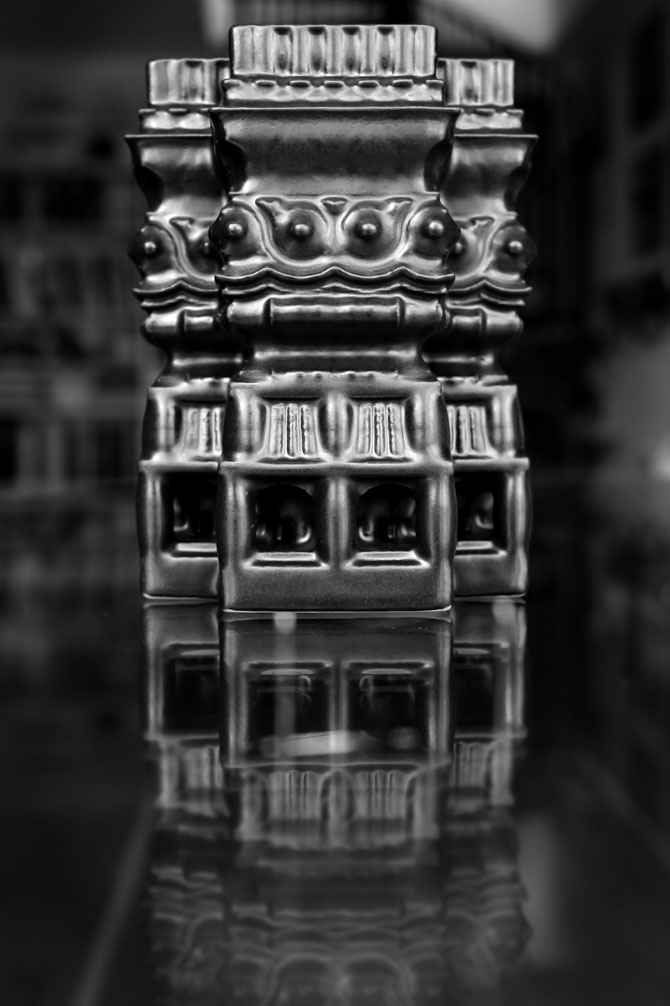
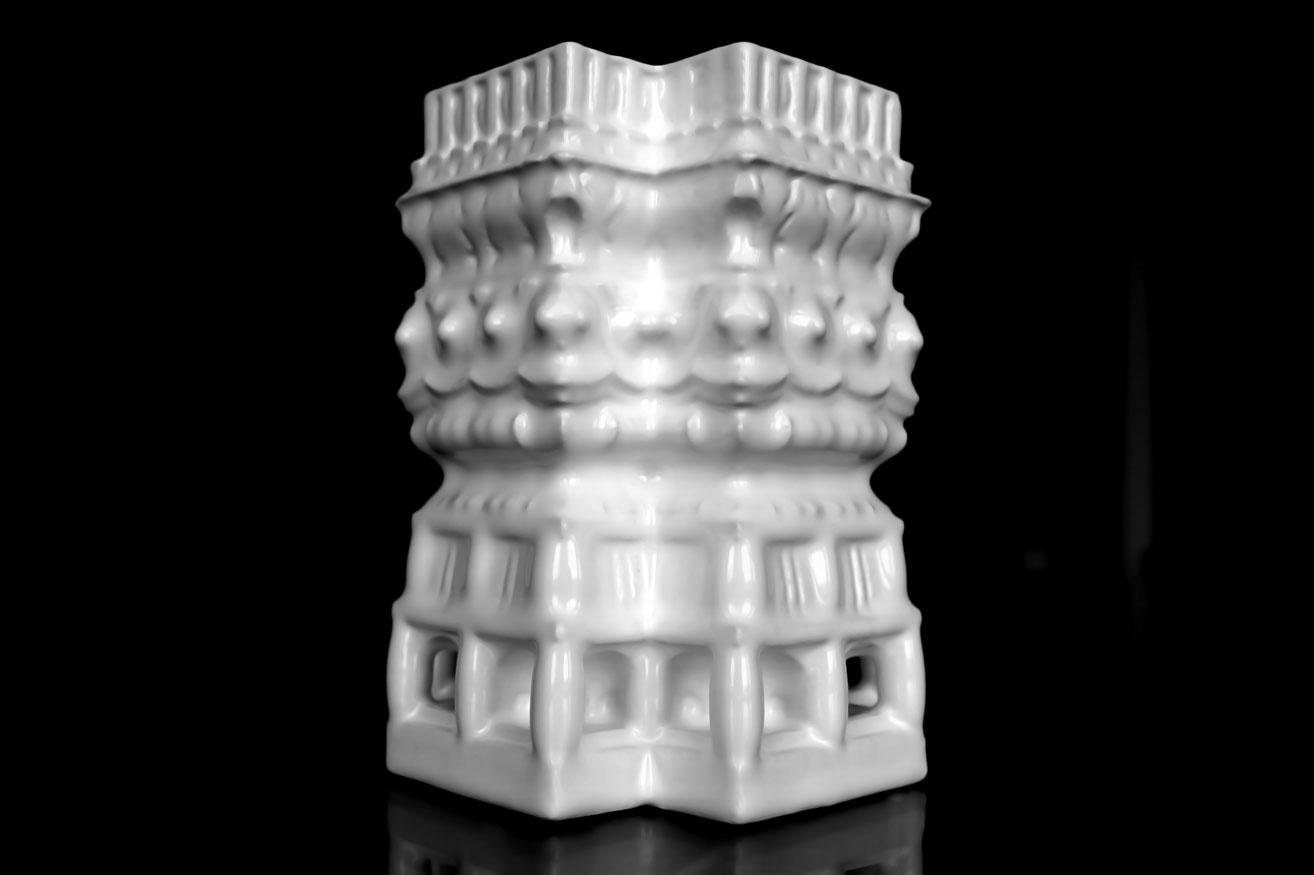
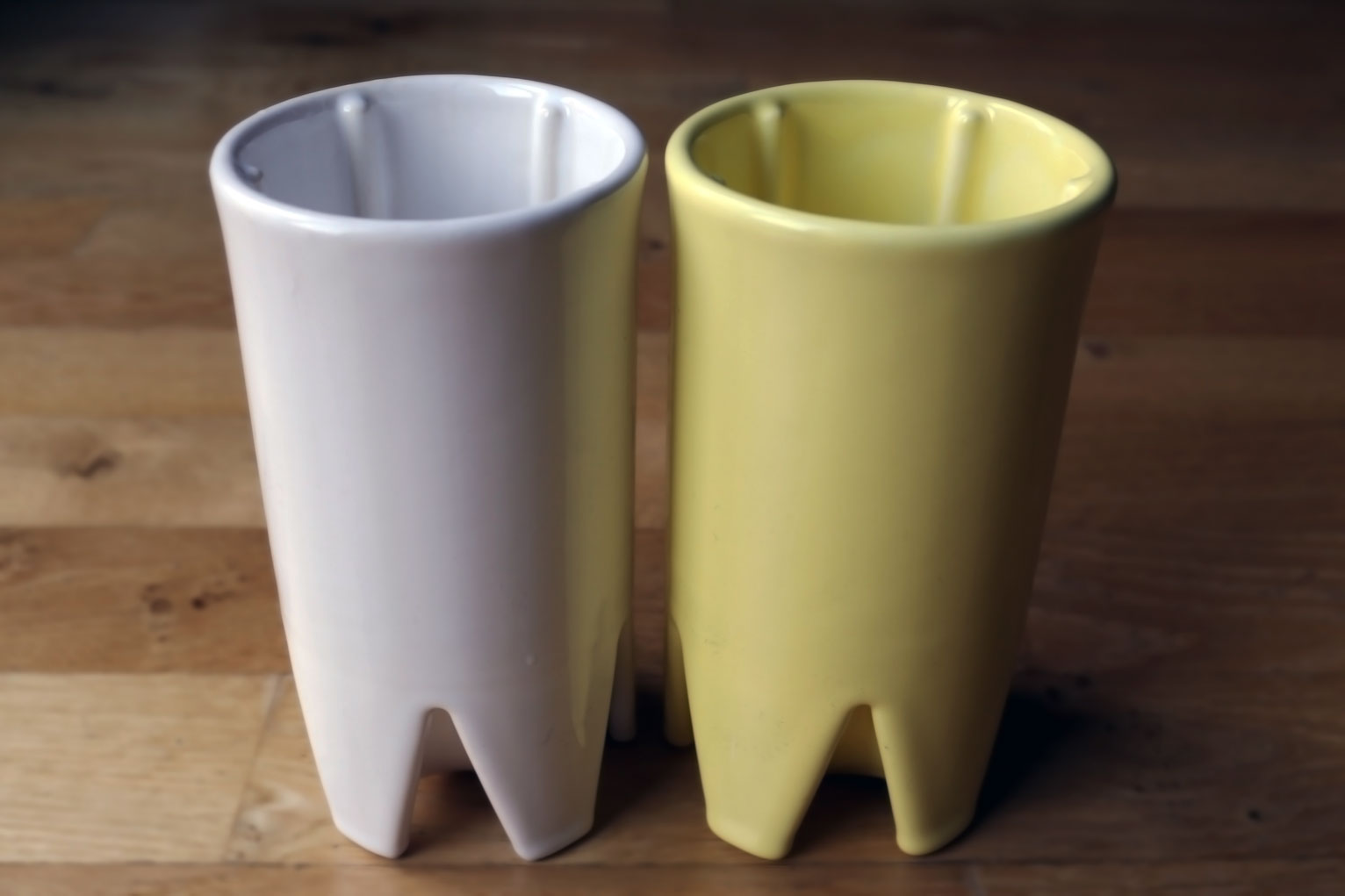
Term2 of Madam's course at the AA saw students exploring ways of producing 3d objects using the rapid prototyping equipment, and the old-school workshop, with lots of hands-on crafting action involving glazing, building, firing etc.

The work featured here was produced by the stellar Jason Chernak, who incorporated parametric modeling techniques into his process in order to array various ornamental motifs over the surface of his objects, which themselves were designed so that they stack three dimensionally, regardless of their various surface finishes.

See HERE for his thorough and exhaustive PDF booklet describing the full design and fabrication process.


Below are images taken from the PDF booklet.
Previous term here & here.